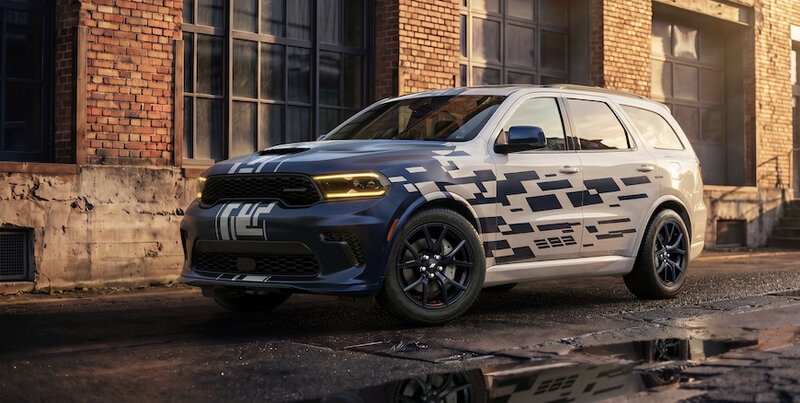



Dodge Unveiled the Dodge Durango R/T 392 Smokescreen Concept
References: caranddriver
American performance brand Dodge used its Roadkill Nights event to unveil a new customization initiative headlined by the Dodge Durango R/T 392 Smokescreen Concept. This design study showcases a bold, factory-level approach to personalization.
Dodge's Durango R/T 392 Smokescreen Concept features a unique Smokescreen exterior finish with flowing Cryo Blue graphics, amber accent lighting, and 20-inch forged wheels in a matching blue hue. The interior, on the other hand, is appointed with Petrol Blue Laguna leather seats and carbon-fiber trim, all while retaining its 475-horsepower HEMI V-8 powertrain. Beyond this concept, Dodge also previewed a new Color Jailbreak program, which aims to make exclusive custom paint colors more affordable and accessible to a wider audience. Additionally, the company introduced Tinted Dual Stripes, a new factory-installed graphic option that uses a translucent finish to allow the underlying body color to show through.
Image Credit: Dodge
Trend Themes
-
Factory-backed Customization — Automakers are blending aftermarket-style personalization with OEM quality controls, creating space for scalable premium upgrades that preserve warranty confidence and brand consistency.
-
Accessible Bespoke Finishes — Lower-cost custom paint programs are expanding exclusivity beyond ultra-luxury buyers, signaling potential for modular personalization platforms across mass-market vehicles.
-
Translucent Graphic Design — Layered visual treatments such as tinted stripes introduce new surface-design possibilities, enabling differentiated aesthetics without requiring full repainting or complex body modifications.
Industry Implications
-
Automotive Manufacturing — Factory-installed personalization packages can help manufacturers capture revenue traditionally lost to aftermarket shops while strengthening emotional attachment to vehicle models.
-
Automotive Aftermarket — OEM entry into customization pressures aftermarket providers to specialize in more distinctive materials, digital design tools, and high-touch personalization services.
-
Performance Vehicles — Muscle and performance brands are using visual customization to extend enthusiast appeal, offering fresh differentiation even when core powertrain attributes remain unchanged.
4.7
Score
Popularity
Activity
Freshness