


Reslo AI Rewrites Resumes To Match Job Descriptions And Pass ATS Filters
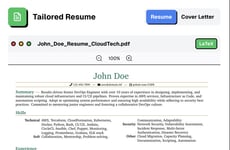
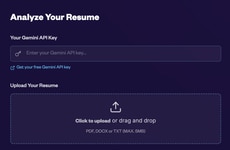
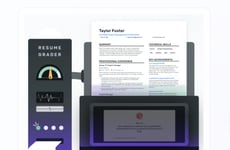
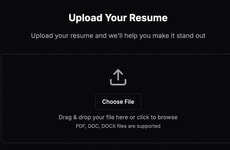
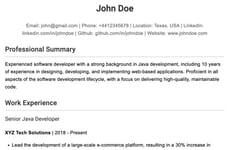
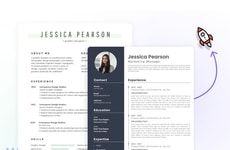
Reslo AI is a resume optimisation tool designed to tailor CVs to specific job descriptions using artificial intelligence. Users upload an existing resume along with a job description, and the system restructures and rewrites the content to better align with applicant tracking system (ATS) criteria.
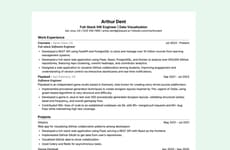
The tool focuses on matching keywords, formatting, and role-specific language on a line-by-line basis to improve perceived relevance during automated screening processes. It is typically used by job seekers aiming to increase interview opportunities by improving compatibility between their applications and hiring systems. From a business perspective, Reslo AI operates within the recruitment technology space, where automation is increasingly used to bridge gaps between candidate profiles and employer requirements. It reflects broader trends in AI-assisted career tools that optimise application materials for algorithm-driven selection processes.
Image Credit: Reslo AI
The tool focuses on matching keywords, formatting, and role-specific language on a line-by-line basis to improve perceived relevance during automated screening processes. It is typically used by job seekers aiming to increase interview opportunities by improving compatibility between their applications and hiring systems. From a business perspective, Reslo AI operates within the recruitment technology space, where automation is increasingly used to bridge gaps between candidate profiles and employer requirements. It reflects broader trends in AI-assisted career tools that optimise application materials for algorithm-driven selection processes.
Image Credit: Reslo AI
Consumer Demand Drives Foldable and Multi-Screen Devices
Consumers are adopting foldable and multi-screen devices as they seek more versatile and pocketable screen options for enhanced mobility and functionality.
Question 1
Which of the following types of devices have you personally used in the past 12 months?
Select up to 8
Question 2
What are the main reasons you use or chose this type of device?
Select up to 3
Question 3
How likely would you be to choose a foldable or multi-screen device the next time you purchase a smartphone, tablet, or laptop?
Trend Themes
-
AI-powered Resume Tailoring — Personalized resume rewriting driven by machine learning models that adapt content to specific job descriptions could upend traditional one-size-fits-all application documents.
-
Ats-optimization Algorithms — Keyword-weighting and format-aware algorithms that predict applicant tracking system outcomes are redefining how relevance is quantified in early-stage hiring.
-
Line-by-line Semantic Matching — Fine-grained semantic alignment between candidate statements and role requirements enables automated systems to surface latent fit signals previously invisible to recruiters.
Industry Implications
-
Recruitment Technology — End-to-end hiring platforms integrating resume optimization can change sourcing dynamics by shifting discovery toward algorithmically amplified candidate profiles.
-
HR Saas — Cloud-based HR suites embedding ATS-aware content tools may transform screening efficiency and influence vendor differentiation through smarter candidate matching.
-
Career Coaching Platforms — Digital coaching services augmented with AI rewriting capabilities are poised to alter value propositions by offering data-driven improvements to application success rates.
2.6
Score
Popularity
Activity
Freshness