

Powerhouse Company Has Designed Valckensteyn
Kalin Ned — August 2, 2026 — Art & Design
References: powerhouse-company
Powerhouse Company's Valckensteyn project figures as Rotterdam's first mass-timber residential building. This concept provides 82 affordable rental homes in the Pendrecht neighborhood for housing corporation Woonstad Rotterdam, with the 20-story structure reinterpreting the former Valckensteyn building that shaped the area from 1971 to 2012 through an innovative timber construction approach.
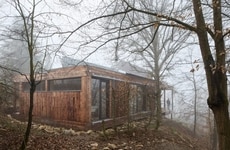
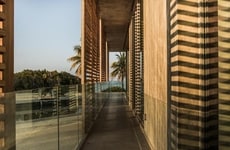
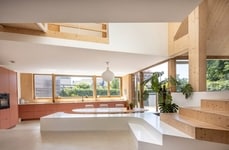
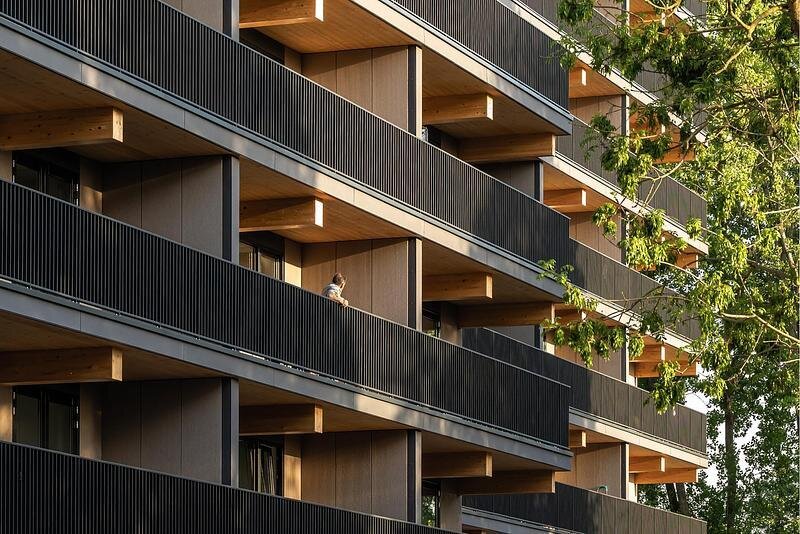
Powerhouse Company constructed the Valckensteyn building using prefabricated cross-laminated timber elements, with the main structure made entirely from cross-laminated timber except for the ground floor and elevator and stair cores. Timber surfaces remain exposed where they can be protected. Durable, demountable fiber-cement panels are used where greater resilience is required to support efficient maintenance and potential future reuse. A travertine-clad base at ground level recalls materials commonly used in postwar architecture, creating a subtle link to the history and architectural identity of Pendrecht, while each home includes a west-facing balcony nearly two meters deep. A park-like garden designed by LAP Landscape and Urban Design surrounds the building.
Image Credit: Sebastian van Damme
Powerhouse Company constructed the Valckensteyn building using prefabricated cross-laminated timber elements, with the main structure made entirely from cross-laminated timber except for the ground floor and elevator and stair cores. Timber surfaces remain exposed where they can be protected. Durable, demountable fiber-cement panels are used where greater resilience is required to support efficient maintenance and potential future reuse. A travertine-clad base at ground level recalls materials commonly used in postwar architecture, creating a subtle link to the history and architectural identity of Pendrecht, while each home includes a west-facing balcony nearly two meters deep. A park-like garden designed by LAP Landscape and Urban Design surrounds the building.
Image Credit: Sebastian van Damme
Trend Themes
-
Mass-timber Housing — Urban residential projects using cross-laminated timber signal a shift toward lower-carbon construction models that can scale affordable housing without relying on conventional concrete-heavy systems.
-
Prefabricated High-rises — Factory-made structural elements introduce faster, more predictable building processes that may reshape how dense housing is delivered in cities with cost and labor constraints.
-
Demountable Building Materials — Reusable facade and structural components create new potential for circular real estate models where buildings retain value through adaptability, maintenance efficiency, and future material recovery.
Industry Implications
-
Residential Real Estate — Affordable rental developments are increasingly positioned to combine sustainability, density, and resident amenity, creating differentiation in markets facing housing shortages.
-
Construction Materials — Cross-laminated timber, fiber-cement panels, and hybrid facade systems reflect growing demand for durable products that support carbon reduction and lifecycle reuse.
-
Architecture and Design — Contemporary building practices are blending historical context with engineered timber innovation, opening space for design firms to redefine the identity of urban renewal projects.
4.8
Score
Popularity
Activity
Freshness