






RightHear Released Version 6.0.0 of Its Orientation App
Kalin Ned — March 14, 2026 — Social Good
References: right-hear
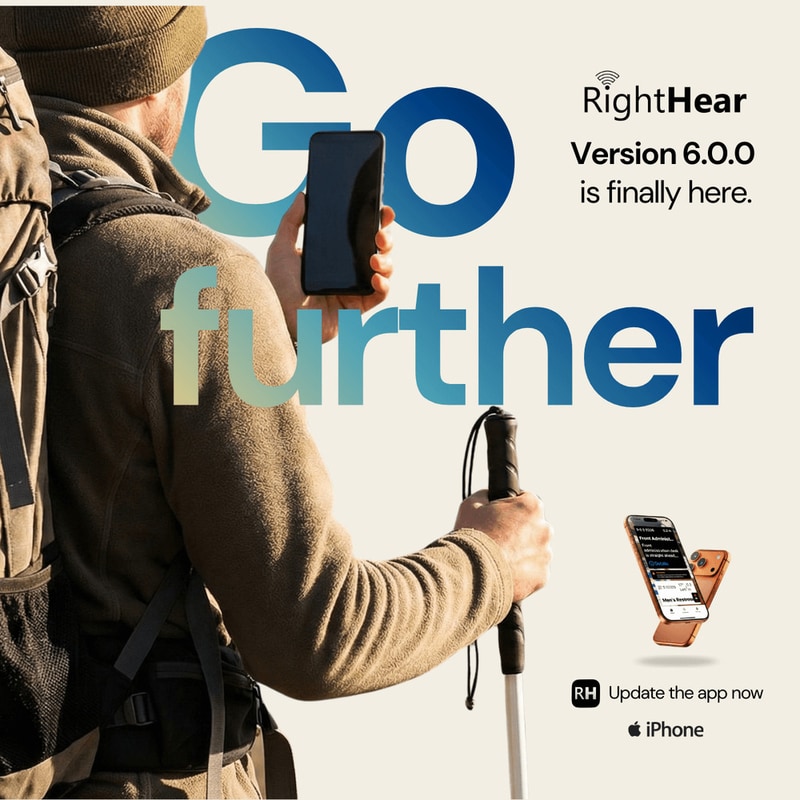
RightHear has released version 6.0.0 of its orientation app for iPhone — a significant update that integrates GPS, beacon, and point-of-interest features into a unified interface designed to make navigation simpler and more intuitive for blind and low vision users.
The new version introduces smarter location accuracy feedback through audible cues and color-coded visual indicators, allowing users to assess the reliability of their positioning and compass direction at a glance or by sound. The orientation app now also proactively displays nearby points of interest based on the user's current direction, which can reduce the need for manual searches. It also includes battery management features such as an optional power-saving mode that intelligently adjusts GPS and beacon scanning to conserve energy.
The setup process for RightHear's platform has been streamlined to require only location and camera access.
Image Credit: RightHear
The new version introduces smarter location accuracy feedback through audible cues and color-coded visual indicators, allowing users to assess the reliability of their positioning and compass direction at a glance or by sound. The orientation app now also proactively displays nearby points of interest based on the user's current direction, which can reduce the need for manual searches. It also includes battery management features such as an optional power-saving mode that intelligently adjusts GPS and beacon scanning to conserve energy.
The setup process for RightHear's platform has been streamlined to require only location and camera access.
Image Credit: RightHear
AI-Driven Creator Economy Tools
Creators are adopting AI-driven tools to monetize, remix, and engage audiences with innovative, consent-driven content, enhancing creative control and revenue opportunities.
Question 1
Do you currently create any kind of content for an audience on any of the following platforms?
Select all that apply
Question 2
Have you used any AI-powered tools to create or manage content in the past 12 months?
Question 3
What impact, if any, has using AI-powered tools had on your content creation?
Select all that apply
Trend Themes
-
Multi-modal Indoor-outdoor Positioning — Integration of GPS, beacons and POI data creates opportunities for highly accurate seamless navigation across indoor and outdoor environments for blind and low-vision users.
-
Adaptive Accessibility Feedback — Smarter audible cues and color-coded reliability indicators present prospects for personalized sensory-feedback systems that adjust to user confidence and environmental conditions.
-
Contextual Point-of-interest Discovery — Proactive display of nearby POIs based on user direction suggests new models for anticipatory location-aware information delivery that reduce cognitive load.
Industry Implications
-
Assistive Technology — Enhanced orientation features point toward next-generation accessibility platforms that bundle positioning, context and power management for broader adoption.
-
Mobile Operating Systems — Built-in support for combined GPS-and-beacon services could reshape OS-level APIs and permissions to better support privacy-aware, low-power accessibility services.
-
Public Transportation and Transit — Directionally aware POI and positioning capabilities imply potential for transit systems to offer more navigable, inclusive station and route information for visually impaired riders.
4
Score
Popularity
Activity
Freshness