





Espressif's ESP32-P4 Runs OpenLara Tomb Raider
Edited by Amy Duong — September 15, 2026 — Tech
This article was written with the assistance of AI.
References: pcgamer
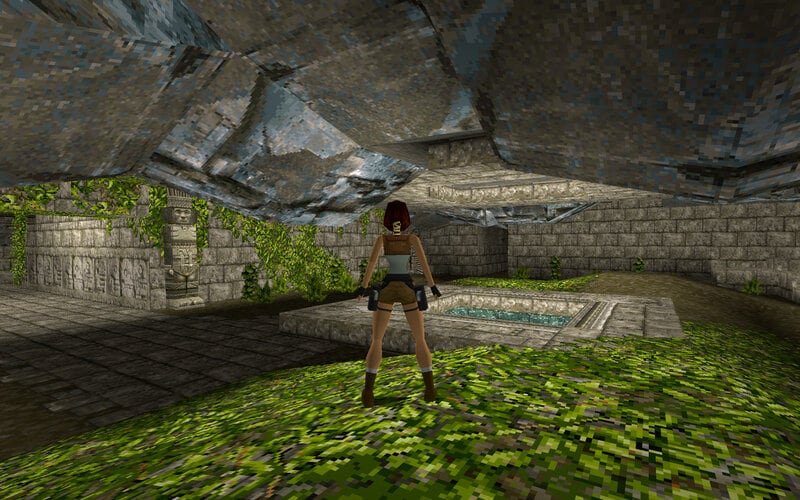
Hardware creator Alejandro Villegas Alonso built a playable port of the original Tomb Raider that runs on the ESP32-P4 microcontroller, featuring a RISC-V SoC with two 400 MHz cores and a datasheet-stated power draw of about 1 W. The port uses the open-source OpenLara engine and implements software rendering, audio, and USB HID keyboard input.
The project runs on the ESP32-P4-Function-EV-Board, which includes a 1024 x 600 seven-inch capacitive touchscreen and a camera module and therefore raises the board's total power budget above the chip's 1 W. Alonso's build renders at 320 x 240 in RGB565 then hardware-scales to 1024 x 600 via the Pixel Processing Accelerator, outputs stereo sound through an ES8311 codec, and accepts USB keyboard input.
Cheap development boards costing under $30 make this approach accessible to retro-gaming tinkerers and DIYers who want lower-power alternatives to full PCs. The setup shows how modest microcontrollers can revive classic titles with tight software rendering and small hardware footprints, and it may inspire more energy-efficient handheld or embedded ports.
Image Credit: Alejandro Villegas Alonso
The project runs on the ESP32-P4-Function-EV-Board, which includes a 1024 x 600 seven-inch capacitive touchscreen and a camera module and therefore raises the board's total power budget above the chip's 1 W. Alonso's build renders at 320 x 240 in RGB565 then hardware-scales to 1024 x 600 via the Pixel Processing Accelerator, outputs stereo sound through an ES8311 codec, and accepts USB keyboard input.
Cheap development boards costing under $30 make this approach accessible to retro-gaming tinkerers and DIYers who want lower-power alternatives to full PCs. The setup shows how modest microcontrollers can revive classic titles with tight software rendering and small hardware footprints, and it may inspire more energy-efficient handheld or embedded ports.
Image Credit: Alejandro Villegas Alonso
Modular Growth Gear
Parents are adopting modular youth gear that is adjustable, upgradeable, and serviceable to accommodate fast-growing athletes and reduce the need for full replacement cycles.
Question 1
Do you currently have any children under 18 who participate in organized or recreational sports?
Question 2
Have you ever purchased sports gear designed to adjust as your child grows?
Question 3
When your child outgrows a piece of sports gear, how much of a problem is having to replace it?
Question 4
What bothers you MOST about replacing outgrown gear?
Question 5
How likely would you be to choose sports gear that adjusts or upgrades as your child grows the next time you buy one?
Trend Themes
-
Microcontroller Retro Gaming — Classic games running on low-cost microcontrollers reveal new potential for compact entertainment devices with minimal energy demands.
-
Open-source Game Engines — Community-maintained engines such as OpenLara enable legacy titles to migrate onto unconventional hardware platforms without proprietary development barriers.
-
Low-power Handhelds — Energy-efficient chips paired with modest displays and input support create space for niche portable consoles that prioritize battery life and affordability.
Industry Implications
-
Consumer Electronics — Affordable development boards and embedded processors are expanding the design possibilities for lightweight gaming hardware and hobbyist devices.
-
Video Games — Retro game preservation gains fresh relevance as iconic titles become playable across small-form-factor systems and experimental computing environments.
-
Semiconductors — RISC-V microcontrollers with graphics acceleration highlight a growing market for chips that balance multimedia capability with ultra-low power consumption.
6
Score
Popularity
Activity
Freshness