


smul's Microwavable Plant-Based Meals Nourish with Lentils and Beans
Laura McQuarrie — March 9, 2026 — Lifestyle
As protein takes center stage in the way people think about their meals, vegetarian consumers are pushing beyond the default options and actively seeking out plant-based meals that deliver on protein without relying on soy, like smul's range of non-protein soy meals.
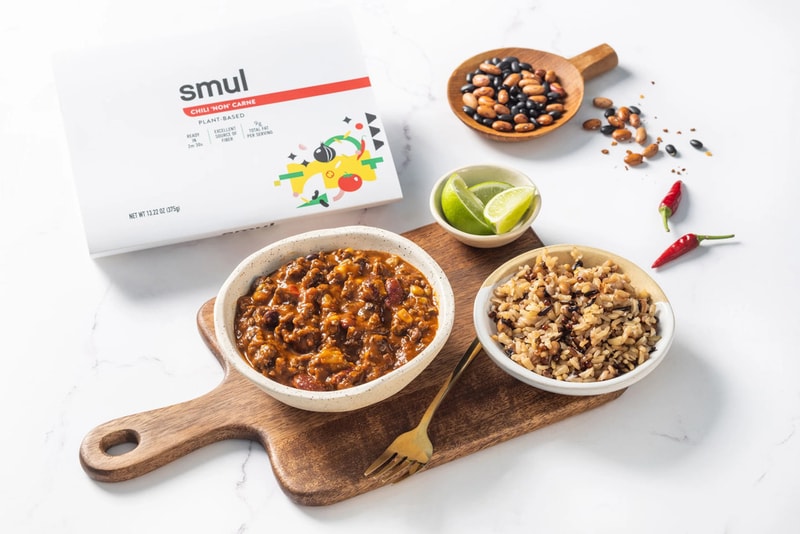
These no-fridge-needed meals are ready to be picked up in nourishing varieties like Tikka Masala, Lentil Ragu and Chili 'Non' Carne that are packed with whole grains. smul's best-selling Lentil Ragu, for example, can be enjoyed in minutes, and it's made with a satisfying combination of brown basmati rice and sorghum, sundried tomatoes, and mushrooms. Preparing this non-soy protein meal, and others from the brand, is as simple as puncturing the film and placing the sleeve in the microwave for a quick steaming.
These no-fridge-needed meals are ready to be picked up in nourishing varieties like Tikka Masala, Lentil Ragu and Chili 'Non' Carne that are packed with whole grains. smul's best-selling Lentil Ragu, for example, can be enjoyed in minutes, and it's made with a satisfying combination of brown basmati rice and sorghum, sundried tomatoes, and mushrooms. Preparing this non-soy protein meal, and others from the brand, is as simple as puncturing the film and placing the sleeve in the microwave for a quick steaming.
AI-Driven Creator Economy Tools
Creators are adopting AI-driven tools to monetize, remix, and engage audiences with innovative, consent-driven content, enhancing creative control and revenue opportunities.
Question 1
Do you currently create any kind of content for an audience on any of the following platforms?
Select all that apply
Question 2
Have you used any AI-powered tools to create or manage content in the past 12 months?
Question 3
What impact, if any, has using AI-powered tools had on your content creation?
Select all that apply
Trend Themes
-
Non-soy Protein Mainstreaming — Growing consumer demand for high-protein plant meals that avoid soy signals opportunities for novel legume- and grain-based protein formulations that redefine vegetarian protein sources.
-
Shelf-stable Microwavable Meals — Convenience-driven products that require no refrigeration and heat quickly in microwaves indicate potential for ambient, ready-to-eat entrees with extended shelf life and restaurant-quality textures.
-
Ancient and Whole-grain Integration — The fusion of sorghum, brown basmati and other whole grains into protein-forward dishes points toward innovations in grain processing and flavor pairings to elevate nutrition and mouthfeel.
Industry Implications
-
Ready-to-eat Food Manufacturing — Manufacturers can reimagine production lines and formulations to produce scalable, non-soy protein entrees that balance protein density, taste and ambient stability.
-
Food Packaging and Preservation — Advances in film, aseptic processing and microwave-steam packaging present opportunities to extend shelf life while preserving texture and nutrient profiles in plant-based meals.
-
Retail and Foodservice Distribution — Cold-chain-free distribution models and retail-ready grab-and-go assortments suggest new logistics and merchandising approaches tailored to protein-centric, plant-based convenience foods.
3.5
Score
Popularity
Activity
Freshness