





Meta Has Launched Muse Code for Complex Software Repos
Adam Harrie — August 6, 2026 — Tech
References: research.meta.ai & techcrunch
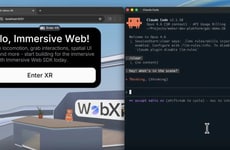
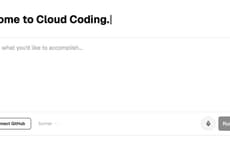
Tech giant Meta has released 'Muse Code,' which entered beta as a terminal-based coding agent designed to handle full software engineering tasks across large repositories. Powered by Meta's Muse Spark coding model, the tool handles substantial projects by launching parallel sub-agents that work together within isolated worktrees, leaving developers' working copies untouched.
Meta CEO Mark Zuckerberg cited internal testing in which the tool built six features for a game simultaneously without collisions. AI chief Alexander Wang positioned the tool as a cost-effective alternative to competitors such as OpenAI's Codex and Anthropic's Claude Code.
As AI coding agents become increasingly central to software development workflows, Meta's entry signals that major AI labs are racing to differentiate themselves through cost and parallel processing capabilities rather than competing solely on raw model performance.
Image Credit: Meta
Meta CEO Mark Zuckerberg cited internal testing in which the tool built six features for a game simultaneously without collisions. AI chief Alexander Wang positioned the tool as a cost-effective alternative to competitors such as OpenAI's Codex and Anthropic's Claude Code.
As AI coding agents become increasingly central to software development workflows, Meta's entry signals that major AI labs are racing to differentiate themselves through cost and parallel processing capabilities rather than competing solely on raw model performance.
Image Credit: Meta
AI-Driven Creator Economy Tools
Creators are adopting AI-driven tools to monetize, remix, and engage audiences with innovative, consent-driven content, enhancing creative control and revenue opportunities.
Question 1
Do you currently create any kind of content for an audience on any of the following platforms?
Select all that apply
Question 2
Have you used any AI-powered tools to create or manage content in the past 12 months?
Question 3
What impact, if any, has using AI-powered tools had on your content creation?
Select all that apply
Trend Themes
-
Parallel Coding Agents — Multi-agent systems that divide software tasks across isolated worktrees create new efficiency models for building features, fixing bugs, and managing complex repositories without disrupting active development.
-
Cost-optimized AI Development — Enterprise demand for affordable coding assistants is shifting competition toward tools that balance performance, scalability, and operating cost across large engineering teams.
-
Repository-aware Automation — AI tools built to understand sprawling codebases introduce new possibilities for automating end-to-end software tasks that previously required deep institutional knowledge.
Industry Implications
-
Software Development — Engineering organizations can benefit from agentic coding platforms that accelerate feature delivery while reducing merge conflicts and manual coordination overhead.
-
Artificial Intelligence — AI labs are differentiating through orchestration, workflow integration, and deployment economics as coding agents become a major battleground for enterprise adoption.
-
Enterprise Technology — Large companies managing complex internal systems may see new value in AI-powered development infrastructure that improves productivity across distributed technical teams.
4.1
Score
Popularity
Activity
Freshness