



MINOR lab Reimagines the Fushan Coffee Shop in Haikou
Edited by Kanesa David — April 17, 2026 — Art & Design
This article was written with the assistance of AI.
References: minorlab.info & retaildesignblog.net
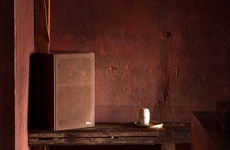
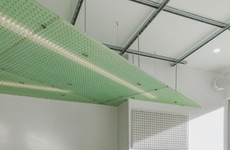
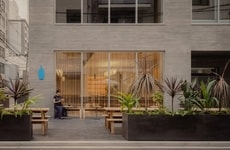
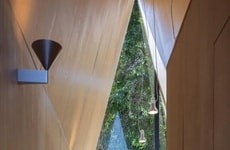
MINOR lab redesigned Fushan Coffee’s two-story retail building in Haikou, Hainan, creating a site-specific coffee venue featuring volcanic-red sculptural walls and a glass street façade. The project preserved the original concrete frame and added a corrugated aluminum canopy that forms a sheltered threshold and improves visual connection with the street.
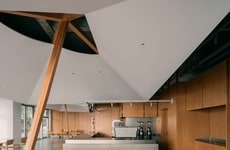
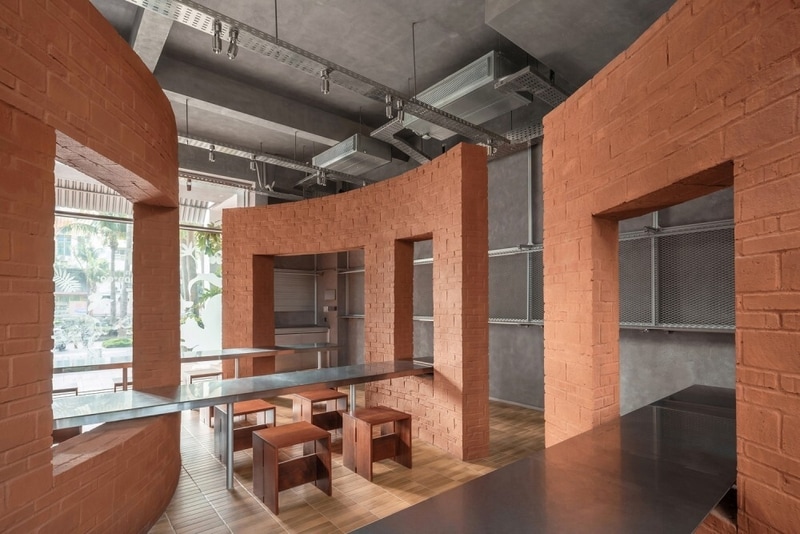
Inside, the ground floor reads as a "Sculptural Field" where three curved masonry walls carve zones and three continuous steel tables thread through openings, while a counter serves traditional Fushan coffee brewed in tin pots. A modular aluminum profile system integrates lighting and display, and the restrained exterior keeps a friendly, approachable street presence.
The upper floor functions as a coffee laboratory centered on a roasting machine, cupping table and barista training, blending production and public programming. By foregrounding local materials, production processes and social interactions, the redesign turns everyday coffee rituals into a spatial narrative that ties the brand to regional heritage and experiential retail trends.
Image Credit: MINOR lab
Inside, the ground floor reads as a "Sculptural Field" where three curved masonry walls carve zones and three continuous steel tables thread through openings, while a counter serves traditional Fushan coffee brewed in tin pots. A modular aluminum profile system integrates lighting and display, and the restrained exterior keeps a friendly, approachable street presence.
The upper floor functions as a coffee laboratory centered on a roasting machine, cupping table and barista training, blending production and public programming. By foregrounding local materials, production processes and social interactions, the redesign turns everyday coffee rituals into a spatial narrative that ties the brand to regional heritage and experiential retail trends.
Image Credit: MINOR lab
Modular Growth Gear
Parents are adopting modular youth gear that is adjustable, upgradeable, and serviceable to accommodate fast-growing athletes and reduce the need for full replacement cycles.
Question 1
Do you currently have any children under 18 who participate in organized or recreational sports?
Question 2
Have you ever purchased sports gear designed to adjust as your child grows?
Question 3
When your child outgrows a piece of sports gear, how much of a problem is having to replace it?
Question 4
What bothers you MOST about replacing outgrown gear?
Question 5
How likely would you be to choose sports gear that adjusts or upgrades as your child grows the next time you buy one?
Trend Themes
-
Site-specific Experiential Design — Designs that embed local materials and narratives into spatial layouts create immersive brand experiences that shift retail from transactional to culturally resonant destinations.
-
Production-forward Retail — Retail spaces that expose and integrate onsite production like roasting or making introduce transparent supply chains that transform consumer trust and engagement.
-
Modular Integrated Fixtures — Flexible aluminum-profile systems and continuous furnishings enable rapid reconfiguration of displays and lighting, supporting adaptive programming and lowered renovation cycles.
Industry Implications
-
Specialty Coffee Retail — Cafés that combine ritual-driven brewing, visible roasting, and training labs offer differentiated customer experiences that can command premium pricing and foster community loyalty.
-
Commercial Architecture and Interior Design — Architects and designers focused on local-material narratives and modular systems can deliver high-value, site-responsive renovations that extend brand storytelling into built form.
-
Retail Fixtures and Lighting Manufacturing — Producers of modular aluminum profiles and integrated lighting solutions can enable faster, scalable fit-outs that support experiential retail models and reduce total cost of ownership.
2.6
Score
Popularity
Activity
Freshness