






MCP Defender Protects AI Apps From Malicious Actions In Real Time
Ellen Smith — May 27, 2026 — Lifestyle
References: mcpdefender
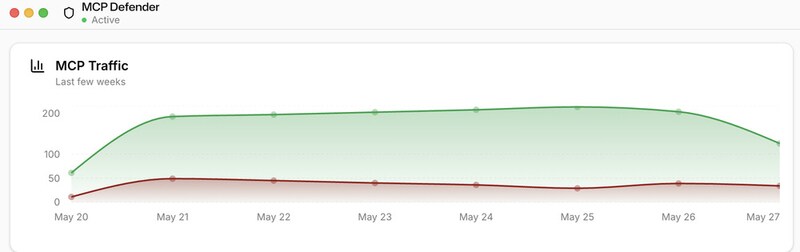
MCP Defender is a desktop security tool designed to monitor and protect AI applications such as Cursor. It focuses on preventing potentially harmful or unauthorized actions initiated by AI tools on a user’s system.
The app runs in the background and detects when an AI tries to perform risky operations on the computer. It then alerts the user and provides the option to block or allow the action. This creates a safeguard layer between AI applications and system-level access, helping users maintain control over what their AI tools can do. The goal is to improve safety while using increasingly autonomous AI systems.
MCP Defender is aimed at developers and power users working with AI-assisted tools. By adding real-time protection, it helps reduce security risks in AI-driven workflows.
Image Credit: MCP Defender
The app runs in the background and detects when an AI tries to perform risky operations on the computer. It then alerts the user and provides the option to block or allow the action. This creates a safeguard layer between AI applications and system-level access, helping users maintain control over what their AI tools can do. The goal is to improve safety while using increasingly autonomous AI systems.
MCP Defender is aimed at developers and power users working with AI-assisted tools. By adding real-time protection, it helps reduce security risks in AI-driven workflows.
Image Credit: MCP Defender
Trend Themes
-
Real-time AI Runtime Protection — A rising emphasis on live monitoring of AI behaviors creates opportunities for products that intercept and evaluate AI actions before they reach system resources.
-
AI System Call Monitoring — Tools that trace and contextualize system-level calls made by AI agents are emerging as a way to surface anomalous or unauthorized operations with high fidelity.
-
User-controlled AI Privilege Layers — Increasing demand for fine-grained consent models positions layered privilege controls as a mechanism to limit autonomous AI capabilities while preserving productivity.
Industry Implications
-
Enterprise Software Development — Development teams adapting AI-assisted coding workflows can integrate runtime safety guards to reduce the risk of automated tools making harmful system changes.
-
Cybersecurity and Threat Detection — Security providers are positioned to extend endpoint protection by incorporating AI-intent analysis to distinguish malicious prompts and risky agent behavior.
-
Devops and CI/CD Tooling — Build and deployment pipelines that incorporate AI validators could enable verification of automated actions within continuous integration environments to prevent unsafe operations.
3.7
Score
Popularity
Activity
Freshness