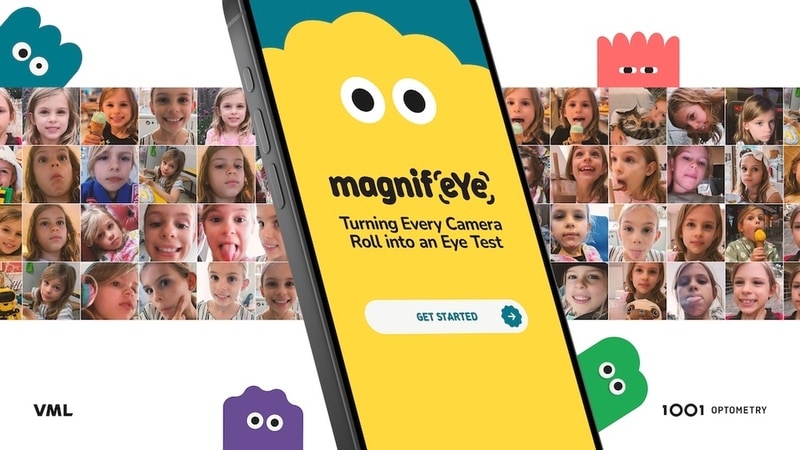
VML and 1001 Optometry came together to create Magnif-Eye, a first-of-its-kind tool that uses artificial intelligence to scan photos for early warning signs of short-sightedness in kids. The AI-powered vision screening experience is designed to scan photos on parents' phones and detect early warning signs of myopia in children—like focus-related squinting, eye protrusion and gaze asymmetry—years before most diagnoses. After flagging potential vision concerns, Magnif-eye equips parents with actionable guidance.
Magnif-Eye launched on World Optometry Day, and this simple tool makes it easier to catch potential issues early based on something many parents already do: document their child’s eye development with everyday photos. Importantly, for safety and privacy, the tool processes images without saving them or storing data.
Protein Cottage Cheese
Consumers are expanding their consumption of protein-rich cottage cheese products as TikTok-driven interest fuels innovation and market growth
Question 1
Compared with 12 months ago, how often do you consume cottage cheese or cottage-cheese-based products today?
Question 2
Which of the following, if any, have influenced your interest in cottage cheese or cottage-cheese-based products?
Select all that apply
Consumer Demand Drives Foldable and Multi-Screen Devices
Consumers are adopting foldable and multi-screen devices as they seek more versatile and pocketable screen options for enhanced mobility and functionality.
Question 1
Which of the following types of devices have you personally used in the past 12 months?
Select up to 8
Question 2
What are the main reasons you use or chose this type of device?
Select up to 3
Question 3
How likely would you be to choose a foldable or multi-screen device the next time you purchase a smartphone, tablet, or laptop?
Modular Growth Gear
Parents are adopting modular youth gear that is adjustable, upgradeable, and serviceable to accommodate fast-growing athletes and reduce the need for full replacement cycles.
Question 1
Do you currently have any children under 18 who participate in organized or recreational sports?
Question 2
Have you ever purchased sports gear designed to adjust as your child grows?
Question 3
When your child outgrows a piece of sports gear, how much of a problem is having to replace it?
Question 4
What bothers you MOST about replacing outgrown gear?
Question 5
How likely would you be to choose sports gear that adjusts or upgrades as your child grows the next time you buy one?
Digital Detox Travel Hardware
Consumers are adopting dumbphones and single-purpose gadgets as essential travel hardware to minimize digital distractions during summer trips.
Question 1
During a summer leisure trip, have you ever left your usual smartphone behind and used only a basic phone or "dumbphone" with limited functions?
Question 2
What was the MAIN reason you used this type of device during your trip?
Question 3
On a future leisure trip, how likely would you be to leave your smartphone behind and use only a basic phone with limited functions?
AI-Driven Creator Economy Tools
Creators are adopting AI-driven tools to monetize, remix, and engage audiences with innovative, consent-driven content, enhancing creative control and revenue opportunities.
Question 1
Do you currently create any kind of content for an audience on any of the following platforms?
Select all that apply
Question 2
Have you used any AI-powered tools to create or manage content in the past 12 months?
Question 3
What impact, if any, has using AI-powered tools had on your content creation?
Select all that apply
Trend Themes
AI-based Preventive Screening — Early detection models embedded in everyday devices can shift healthcare from reactive treatment to continuous, AI-driven prevention by identifying conditions before clinical symptoms emerge.
Privacy-preserving Edge Vision AI — On-device inference that analyzes images without storing data creates pathways for compliant, scalable diagnostic tools that maintain user trust while delivering medical-grade insights.
Photo-based Pediatric Diagnostics — Leveraging routine family photos as a longitudinal data source enables nonclinical monitoring of child development metrics and the creation of low-friction screening services.
Industry Implications
Pediatric Healthcare — Integrating AI screening into pediatric workflows could reduce missed early diagnoses and reframe routine checkups around continuous remote monitoring data.
Consumer Tech - Smartphones — Smartphone manufacturers and app ecosystems stand to transform handset cameras into distributed health sensors that deliver personalized diagnostics without additional hardware.
Optometry Services — Eye care providers can expand reach and triage efficiency by incorporating automated photo-analysis tools that identify at-risk patients earlier in the care pathway.