




Perceptron Launches Its Isaac 0.5 Model With Open Weights
Edited by Adam Harrie — September 3, 2026 — Tech
This article was written with the assistance of AI.
References: perceptron.inc & techcrunch
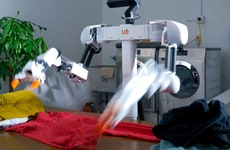
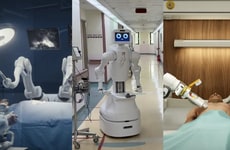
Perceptron, a startup founded by former Meta FAIR researchers Armen Aghajanyan and Akshat Shrivastava, launched Isaac 0.5, a general-purpose vision model designed to help machines perceive, reason and act in industrial settings. Released as an open-weight model, Isaac 0.5 targets vision-guided robots operating on factory floors and in warehouses while also supporting visual intelligence extraction from recorded video.
The model was trained on large-scale datasets spanning general video, egocentric footage, images, text and robotic trajectories. Perceptron designed Isaac 0.5 to handle multiple stages of physical tasks rather than a single repetitive function, with potential applications across manufacturing, logistics, warehousing, security, mobility and media.
For businesses, Isaac 0.5 could support more flexible deployment of industrial robotics by combining perception, reasoning and action within a general-purpose model. Its open-weight release also gives developers greater visibility into the model while supporting broader integration across physical AI applications.
Image Credit: Perceptron
The model was trained on large-scale datasets spanning general video, egocentric footage, images, text and robotic trajectories. Perceptron designed Isaac 0.5 to handle multiple stages of physical tasks rather than a single repetitive function, with potential applications across manufacturing, logistics, warehousing, security, mobility and media.
For businesses, Isaac 0.5 could support more flexible deployment of industrial robotics by combining perception, reasoning and action within a general-purpose model. Its open-weight release also gives developers greater visibility into the model while supporting broader integration across physical AI applications.
Image Credit: Perceptron
Digital Detox Travel Hardware
Consumers are adopting dumbphones and single-purpose gadgets as essential travel hardware to minimize digital distractions during summer trips.
Question 1
During a summer leisure trip, have you ever left your usual smartphone behind and used only a basic phone or "dumbphone" with limited functions?
Question 2
What was the MAIN reason you used this type of device during your trip?
Question 3
On a future leisure trip, how likely would you be to leave your smartphone behind and use only a basic phone with limited functions?
Trend Themes
-
Open-weight Physical AI — Transparent model access is lowering barriers for developers to adapt industrial vision systems across robotics, surveillance and operational intelligence use cases.
-
General-purpose Robot Vision — Multi-stage perception and reasoning models are enabling machines to move beyond repetitive tasks toward more flexible factory and warehouse automation.
-
Video-to-insight Automation — Recorded visual data is becoming a source of operational intelligence as AI extracts patterns, risks and workflow improvements from industrial footage.
Industry Implications
-
Industrial Robotics — General-purpose vision models are expanding the potential for robots to perceive changing environments and perform varied physical tasks with less retraining.
-
Warehousing and Logistics — AI-powered visual reasoning creates opportunities for smarter inventory handling, workflow monitoring and autonomous movement in high-throughput facilities.
-
Manufacturing Technology — Flexible perception systems are reshaping production environments by supporting adaptive quality control, machine coordination and real-time process visibility.
9.3
Score
Popularity
Activity
Freshness