


The Hyperburgers Inconvenience Store Directly Serves Communities
Elena Rahman — November 9, 2021 — Business
References: francescatambussi & fastcompany
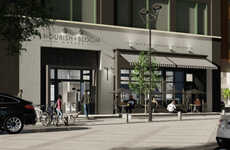
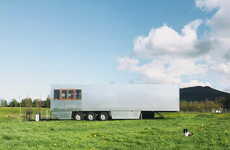
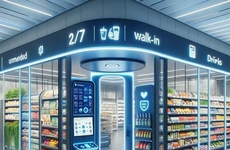
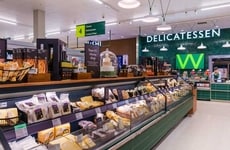
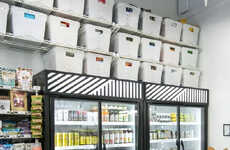
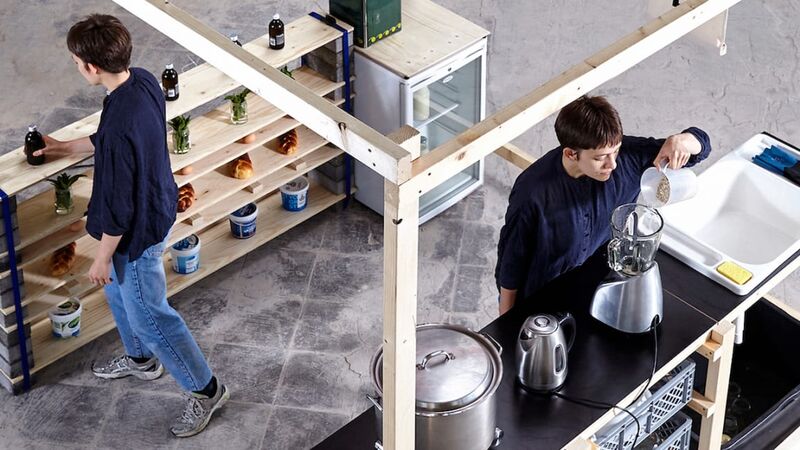
Francesca Tambussi responds to the overpriced and unsustainable average supermarket with the Hyperburgers Inconvenience Store. The prototype store is designed to serve communities rather than businesses. It is designed to run entirely through consumers.
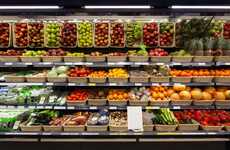
Consumers can drop by the store to pick up anything they need, and in return, they must drop something of value off, similar to a trading market. The store is reserved for groceries and prepared foods. This is an ideal space for home gardeners to stock shelves for direct-to-consumer sales. To finalize a purchase, shoppers use their phones to pay whoever supplied the food. Each item is linked toa peer-to-peer payment system so the money goes directly to the food supplier.
Image Credit: Hyperburgers
Consumers can drop by the store to pick up anything they need, and in return, they must drop something of value off, similar to a trading market. The store is reserved for groceries and prepared foods. This is an ideal space for home gardeners to stock shelves for direct-to-consumer sales. To finalize a purchase, shoppers use their phones to pay whoever supplied the food. Each item is linked toa peer-to-peer payment system so the money goes directly to the food supplier.
Image Credit: Hyperburgers
Modular Growth Gear
Parents are adopting modular youth gear that is adjustable, upgradeable, and serviceable to accommodate fast-growing athletes and reduce the need for full replacement cycles.
Question 1
Do you currently have any children under 18 who participate in organized or recreational sports?
Question 2
Have you ever purchased sports gear designed to adjust as your child grows?
Question 3
When your child outgrows a piece of sports gear, how much of a problem is having to replace it?
Question 4
What bothers you MOST about replacing outgrown gear?
Question 5
How likely would you be to choose sports gear that adjusts or upgrades as your child grows the next time you buy one?
Trend Themes
-
Consumer-run Supermarkets — Opportunity for retailers to eliminate overhead costs and adopt a peer-to-peer payment system.
-
Direct-to-consumer Sales — Opportunity for home gardeners and small-scale food producers to sell directly to consumers, reducing prices and building trust.
-
Community-based Economies — Opportunity for communities to establish economic systems based on reciprocity and collaboration rather than profit-driven corporations.
Industry Implications
-
Retail — Retailers can leverage the community-based model to reduce costs and increase consumer trust.
-
Agriculture — Small-scale food producers can use the direct-to-consumer model to cut out middlemen and build relationships with customers.
-
Blockchain — Blockchain technology can be deployed to secure and streamline peer-to-peer transactions between consumers and food producers.
6.6
Score
Popularity
Activity
Freshness