





EVgo Develops a 750kW Charging Architecture
Edited by Mursal Rahman — October 2, 2026 — Autos
This article was written with the assistance of AI.
References: carscoops
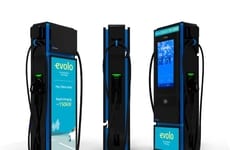
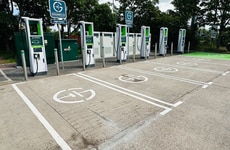
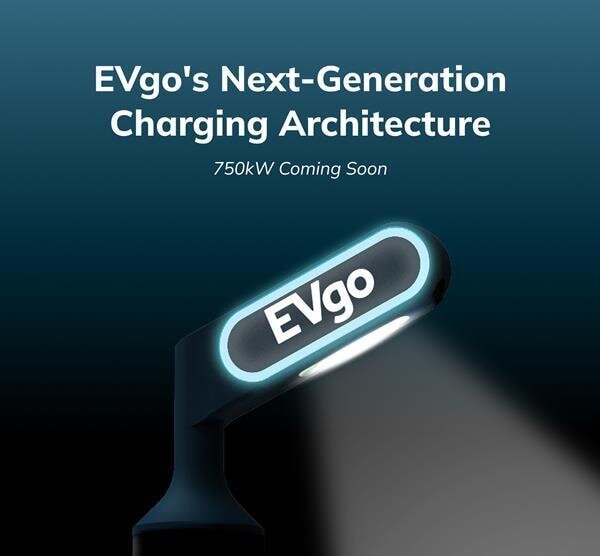
EVgo is developing a next-generation charging system capable of delivering up to 750kW of power, with deployment expected to begin in 2027. The architecture uses dynamic power sharing to automatically adjust energy distribution according to each vehicle’s charging requirements throughout a session. This allows every compatible stall to provide the appropriate power level without requiring drivers to identify a specific charger. NACS connectors, improved cable maneuverability, touchless payments, and upgraded hardware and firmware are also planned.
The system prepares EVgo for vehicles capable of accepting increasingly high charging rates, with the company expecting compatible models to charge in around 10 minutes under suitable conditions. Dynamic allocation can also help smooth demand spikes and use available power more efficiently. For EVgo, NACS compatibility expands its potential customer base, while proprietary charger development provides greater control over network performance and future upgrades.
Image Credit: EVgo
The system prepares EVgo for vehicles capable of accepting increasingly high charging rates, with the company expecting compatible models to charge in around 10 minutes under suitable conditions. Dynamic allocation can also help smooth demand spikes and use available power more efficiently. For EVgo, NACS compatibility expands its potential customer base, while proprietary charger development provides greater control over network performance and future upgrades.
Image Credit: EVgo
Modular Growth Gear
Parents are adopting modular youth gear that is adjustable, upgradeable, and serviceable to accommodate fast-growing athletes and reduce the need for full replacement cycles.
Question 1
Do you currently have any children under 18 who participate in organized or recreational sports?
Question 2
Have you ever purchased sports gear designed to adjust as your child grows?
Question 3
When your child outgrows a piece of sports gear, how much of a problem is having to replace it?
Question 4
What bothers you MOST about replacing outgrown gear?
Question 5
How likely would you be to choose sports gear that adjusts or upgrades as your child grows the next time you buy one?
Trend Themes
-
Dynamic Power Sharing — Adaptive energy distribution across charging stalls creates new possibilities for faster throughput, grid-aware load balancing, and more efficient use of high-capacity infrastructure.
-
Ten-minute EV Charging — Ultra-fast charging architectures are narrowing the convenience gap with fuel stations, reshaping expectations for long-distance electric mobility and fleet uptime.
-
Universal Connector Access — NACS integration expands cross-brand compatibility, enabling charging networks to serve broader driver segments while reducing friction at public charging sites.
Industry Implications
-
Electric Vehicle Charging — High-power proprietary charger platforms offer network operators greater control over performance, maintenance, and scalable upgrades as vehicle charging rates increase.
-
Automotive Manufacturing — Vehicles engineered for higher charging acceptance can benefit from emerging 750kW infrastructure, creating differentiation around shorter stops and improved travel convenience.
-
Energy Infrastructure — Smarter load allocation at charging hubs supports more efficient power utilization, highlighting opportunities for utilities, site hosts, and grid technology providers.
6.6
Score
Popularity
Activity
Freshness