




Tesla Pushes Austin Robotaxi Cutoff to 11PM Despite Night Vision Limits
Edited by Adam Harrie — October 6, 2026 — Tech
This article was written with the assistance of AI.
References: electrek.co
Tesla is extending Austin Robotaxi rides to 11 PM, giving passengers one more hour to book driverless trips after the previous 10 PM cutoff. The Tesla service offers riders a slightly later evening return while the company continues to work through the limits of a camera-only system.
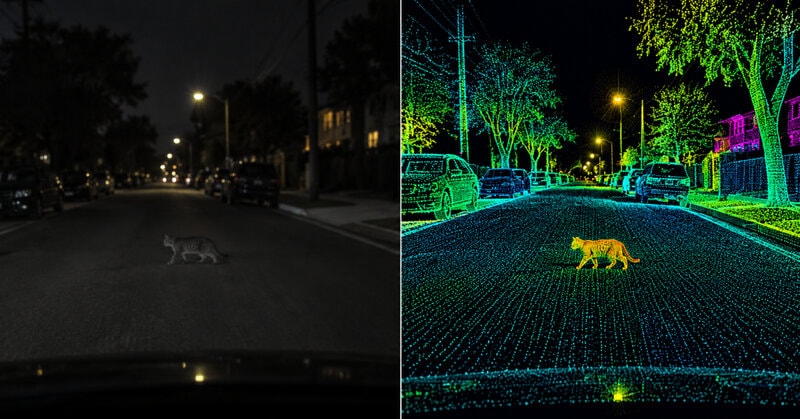
The hard case is a pet that nearly disappears into dark pavement at night. Cameras need light and visual contrast, while lidar, a laser-based sensor that measures distance and shape, and radar can keep reading the road with less reliance on ambient light. Tesla opened Robotaxi in June 2025, with requests running until midnight. Even after Cybercabs joined last month, the added hour still leaves the operation short of its original late-night window.
For riders, this means more flexibility for evening trips in Austin, though full-night access is not yet available. After-dark autonomy now has to earn trust amid visibility problems, not just daytime runs.
Image Credit: Electrek
The hard case is a pet that nearly disappears into dark pavement at night. Cameras need light and visual contrast, while lidar, a laser-based sensor that measures distance and shape, and radar can keep reading the road with less reliance on ambient light. Tesla opened Robotaxi in June 2025, with requests running until midnight. Even after Cybercabs joined last month, the added hour still leaves the operation short of its original late-night window.
For riders, this means more flexibility for evening trips in Austin, though full-night access is not yet available. After-dark autonomy now has to earn trust amid visibility problems, not just daytime runs.
Image Credit: Electrek
Consumer Demand Drives Foldable and Multi-Screen Devices
Consumers are adopting foldable and multi-screen devices as they seek more versatile and pocketable screen options for enhanced mobility and functionality.
Question 1
Which of the following types of devices have you personally used in the past 12 months?
Select up to 8
Question 2
What are the main reasons you use or chose this type of device?
Select up to 3
Question 3
How likely would you be to choose a foldable or multi-screen device the next time you purchase a smartphone, tablet, or laptop?
Trend Themes
-
After-dark Autonomy — Nighttime robotaxi expansion highlights opportunities for safer low-light navigation systems that improve trust beyond daytime operating conditions.
-
Sensor-fusion Mobility — Camera-only limitations create space for hybrid perception platforms combining lidar, radar, and visual AI in autonomous fleets.
-
Extended Urban Robotaxi Windows — Later service hours signal growing demand for flexible driverless transportation that bridges evening mobility gaps in dense cities.
Industry Implications
-
Autonomous Vehicles — Self-driving vehicle developers face pressure to improve perception reliability as commercial services move into more complex nighttime environments.
-
Mobility Services — Ride-hailing and fleet operators can differentiate through dependable off-peak autonomous coverage tailored to nightlife, commuting, and late-return use cases.
-
Automotive Sensors — Advanced sensing suppliers gain relevance as visibility challenges expose the commercial value of hardware that performs consistently in darkness and low contrast.
7.3
Score
Popularity
Activity
Freshness