


DIY Diwheel Envisions a Large-Scale Electric Two-Wheeled Vehicle
References: yankodesign
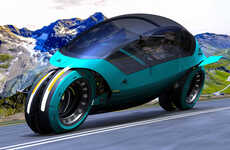
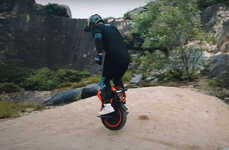
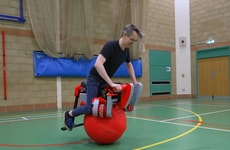
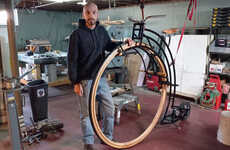
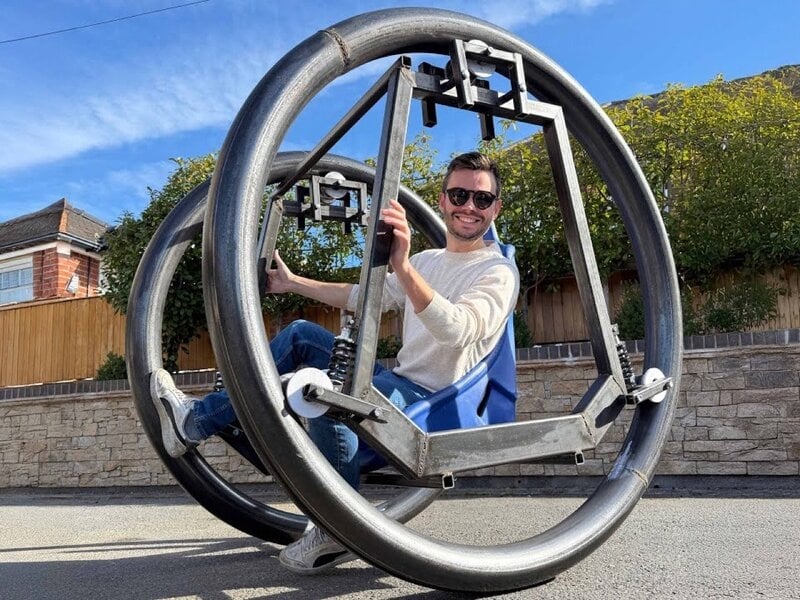
The DIY Diwheel leans into extremes: designer Sam Barker mounts a 60 kW motorcycle motor into a diwheel chassis, combining brute power with a dual-ring frame. The outer rings weigh about 60 kg each and steer differentially, enabling tank-style direction without relying on conventional steering. Barker’s build process is raw and improvisational, relying on heavy steel tubing, overbuilt supports, and rapid iteration. Fabrication errors and misalignment abound, and the project visibly embraces them as part of the machine’s identity.
Rather than a polished prototype, the concept reads like a mechanical diary as each weld, each measurement mistake, each last-minute adjustment is exposed. As the vehicle rolls (albeit tentatively) within its rings, it asks not whether such a machine can function but how far one might go in asking a machine to live at the edge of control.
Image Credit: Sam Barker
Rather than a polished prototype, the concept reads like a mechanical diary as each weld, each measurement mistake, each last-minute adjustment is exposed. As the vehicle rolls (albeit tentatively) within its rings, it asks not whether such a machine can function but how far one might go in asking a machine to live at the edge of control.
Image Credit: Sam Barker
Digital Detox Travel Hardware
Consumers are adopting dumbphones and single-purpose gadgets as essential travel hardware to minimize digital distractions during summer trips.
Question 1
During a summer leisure trip, have you ever left your usual smartphone behind and used only a basic phone or "dumbphone" with limited functions?
Question 2
What was the MAIN reason you used this type of device during your trip?
Question 3
On a future leisure trip, how likely would you be to leave your smartphone behind and use only a basic phone with limited functions?
Trend Themes
-
Raw-engineering Aesthetics — The embrace of visible fabrication flaws in the Diwheel highlights a growing appreciation for raw-engineering aesthetics that showcase the authenticity and iterative process of machine development.
-
Tank-style Steering Systems — Differential steering mechanisms for diwheels open new avenues for tank-style direction systems in electric vehicles, offering novel handling experiences distinct from traditional steering methods.
-
Improv-focused Prototyping — The improvisational approach to building motor-powered diwheels underscores a trend towards rapid prototyping that prioritizes creativity and exploration over precision in early-stage development.
Industry Implications
-
Electric-powered Vehicles — The development of motor-powered diwheels signifies a disruptive exploration within electric-powered vehicles, blending unconventional designs with sustainable energy sources.
-
D.I.Y. Transportation Engineering — DIY projects in transportation engineering are gaining traction, attracting innovators interested in pushing boundaries through hands-on construction and personal experimentation.
-
Alternative Mobility Solutions — As motor-powered diwheels challenge conventional mobility norms, the industry of alternative mobility solutions is ripe for innovations that reimagine personal transportation dynamics.
2.2
Score
Popularity
Activity
Freshness