






Digital Camouflage Conceals Wearers from AI Detection Systems
References: simonweckert
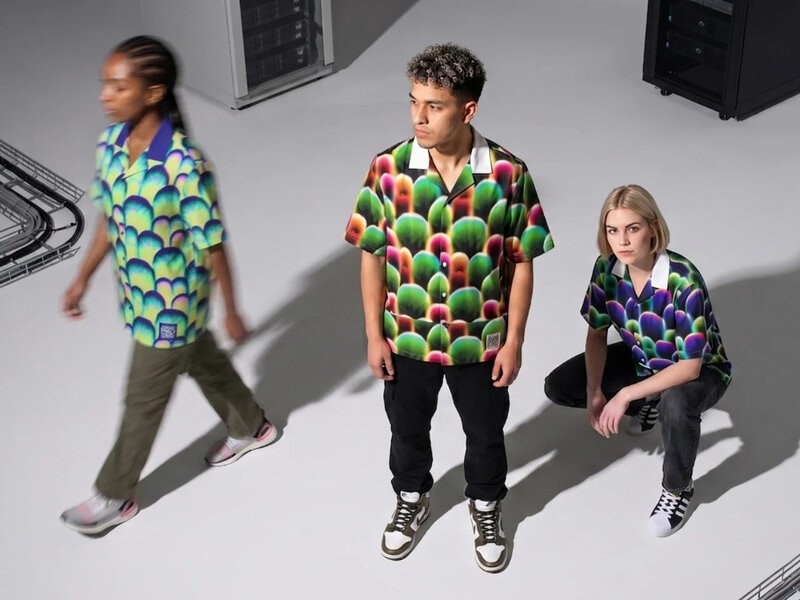
Digital Camouflage is a conceptual garment collection by Simon Weckert that uses adversarial patterns to interfere with AI-powered person detection systems. A continuous generative print covers each garment, introducing computational noise that prevents compatible machine vision models from identifying the wearer as a person. Unlike earlier anti-recognition concepts that relied on fixed visual patches, the full-surface pattern is intended to remain effective as fabric moves, folds, or shifts across different viewing angles.
The collection presents bold graphic textiles while integrating its technical function into the printed surface. Each garment is manufactured in Latvia from a blend of 65% recycled polyester and 35% polyester with digitally printed graphics. Rather than being developed for commercial retail, the project was exhibited at the Ars Electronica Festival 2025 as a design exploration of AI surveillance, computer vision, and personal privacy through wearable technology.
Image Credit: Simon Weckert
The collection presents bold graphic textiles while integrating its technical function into the printed surface. Each garment is manufactured in Latvia from a blend of 65% recycled polyester and 35% polyester with digitally printed graphics. Rather than being developed for commercial retail, the project was exhibited at the Ars Electronica Festival 2025 as a design exploration of AI surveillance, computer vision, and personal privacy through wearable technology.
Image Credit: Simon Weckert
AI-Driven Creator Economy Tools
Creators are adopting AI-driven tools to monetize, remix, and engage audiences with innovative, consent-driven content, enhancing creative control and revenue opportunities.
Question 1
Do you currently create any kind of content for an audience on any of the following platforms?
Select all that apply
Question 2
Have you used any AI-powered tools to create or manage content in the past 12 months?
Question 3
What impact, if any, has using AI-powered tools had on your content creation?
Select all that apply
Trend Themes
-
Adversarial Fashion — Patterned apparel that disrupts machine vision points to new privacy-centered wearables at the intersection of design, security, and algorithmic resistance.
-
Surveillance-aware Textiles — Garments engineered around detection avoidance reflect growing demand for materials that respond to the expansion of automated monitoring in public spaces.
-
Privacy-first Wearables — Conceptual clothing that embeds anonymity into everyday objects signals opportunities for consumer products shaped by digital rights and personal data protection.
Industry Implications
-
Fashion Technology — AI-resistant prints introduce a new functional layer for apparel, expanding fashion beyond aesthetics into computational interaction and privacy performance.
-
Cybersecurity — Adversarial camouflage extends security thinking into the physical world, creating a market for products that protect individuals from automated visual identification.
-
Smart Textiles — Digitally printed fabrics with machine-vision effects suggest a path for textile innovation where surfaces become active participants in human-technology environments.
9
Score
Popularity
Activity
Freshness