






Simetric Launched Its Connectivity Management Orchestration Platform
Edited by Adam Harrie — August 11, 2026 — Tech
This article was written with the assistance of AI.
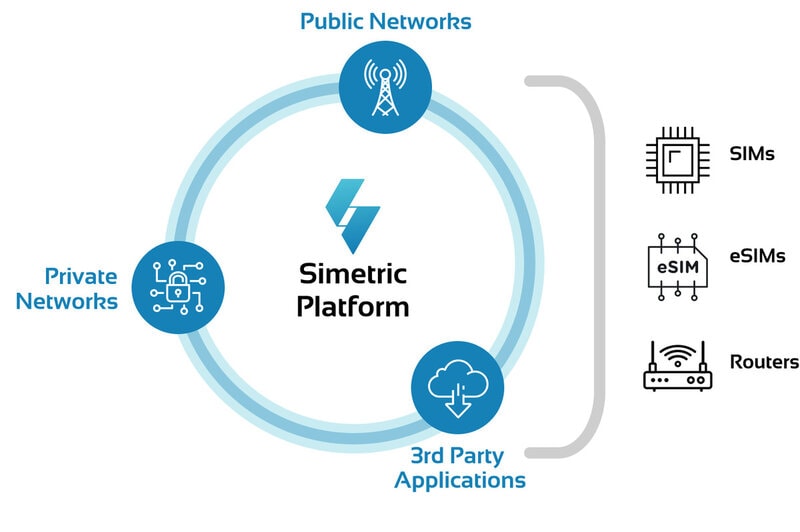
Simetric introduced a Connectivity Management Orchestration platform designed to centralize visibility and control across SIM and eSIM identities spanning mobile carriers, satellite links and operator portals. The platform creates a unified enterprise control layer by normalizing fragmented connectivity data and making distributed device identities more discoverable and actionable.
The system combines carrier telemetry, destination intelligence and direct SIM-level controls, allowing administrators to quarantine devices, swap profiles or adjust rate plans without relying on separate operator interfaces. Simetric also integrates with enterprise platforms such as ServiceNow and targets large connected-device environments across sectors including utilities, automotive and public safety.
For organizations managing extensive IoT fleets, the platform aims to reduce blind spots caused by offline, misprovisioned or unreachable devices while strengthening compliance and operational oversight. The approach reflects growing demand to extend security and governance below traditional IT systems into the connectivity layer itself.
Image Credit: Simetric
The system combines carrier telemetry, destination intelligence and direct SIM-level controls, allowing administrators to quarantine devices, swap profiles or adjust rate plans without relying on separate operator interfaces. Simetric also integrates with enterprise platforms such as ServiceNow and targets large connected-device environments across sectors including utilities, automotive and public safety.
For organizations managing extensive IoT fleets, the platform aims to reduce blind spots caused by offline, misprovisioned or unreachable devices while strengthening compliance and operational oversight. The approach reflects growing demand to extend security and governance below traditional IT systems into the connectivity layer itself.
Image Credit: Simetric
Digital Detox Travel Hardware
Consumers are adopting dumbphones and single-purpose gadgets as essential travel hardware to minimize digital distractions during summer trips.
Question 1
During a summer leisure trip, have you ever left your usual smartphone behind and used only a basic phone or "dumbphone" with limited functions?
Question 2
What was the MAIN reason you used this type of device during your trip?
Question 3
On a future leisure trip, how likely would you be to leave your smartphone behind and use only a basic phone with limited functions?
Trend Themes
-
Sim-level Governance — Enterprises are treating SIM and eSIM identities as controllable security assets, creating room for platforms that manage connectivity policies below traditional device and network management layers.
-
Unified Iot Connectivity Orchestration — Fragmented carrier portals and satellite links are converging into centralized control environments where device visibility, provisioning and cost management can be normalized across large fleets.
-
Connectivity-layer Compliance — Regulatory and operational pressures are expanding compliance oversight into mobile connectivity infrastructure, opening space for audit-ready controls tied directly to distributed device identities.
Industry Implications
-
Iot Fleet Management — Large-scale connected-device deployments benefit from centralized SIM intelligence that reduces unreachable assets, provisioning errors and operational blind spots.
-
Telecommunications — Carrier and operator ecosystems face growing demand for interoperable orchestration layers that simplify enterprise control across mobile, satellite and eSIM environments.
-
Public Safety Technology — Mission-critical agencies require resilient connectivity oversight for distributed devices, making SIM-level control an emerging foundation for reliability and accountability.
3.6
Score
Popularity
Activity
Freshness