



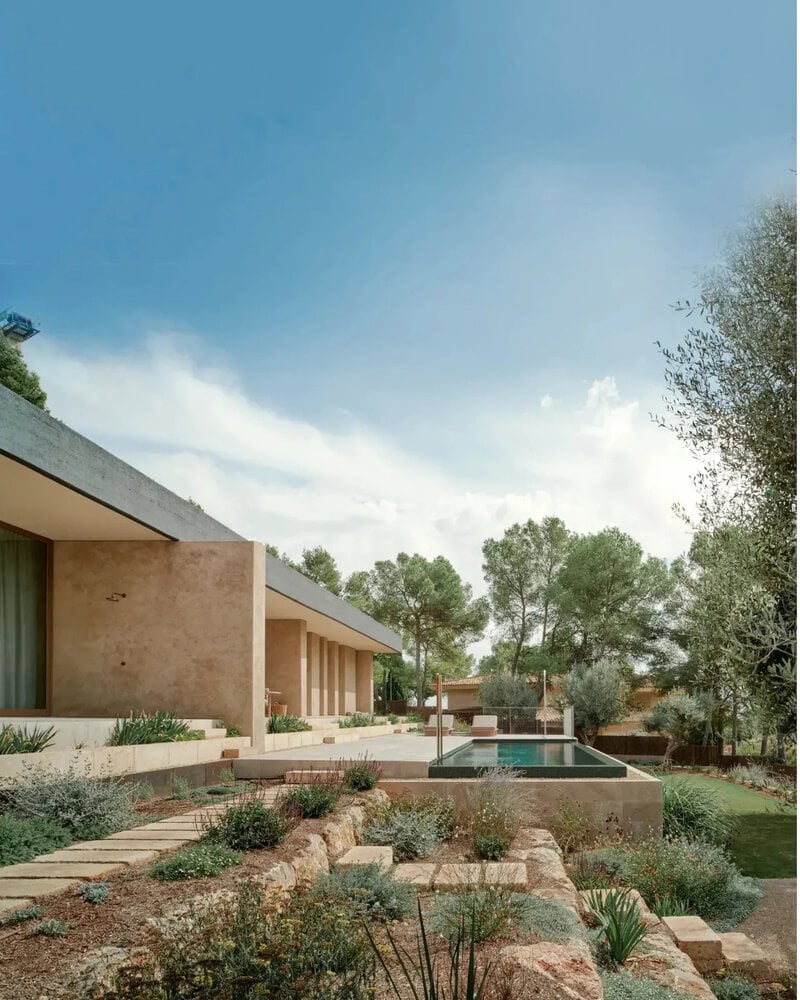



The Casa ÓCulo is a Contemporary Mediterranean Residence
Amy Duong — July 27, 2026 — Art & Design
References: ohlab.net
The Casa Óculo is organized around a continuous flat roof that extends across the site to create shaded perimeter porches and strengthen the connection between indoor and outdoor living. Designed by OHLAB, the residence features a circular roof opening, or óculo, that tracks the sun throughout the day, allowing winter sunlight to warm interior stone floors while limiting direct solar gain during summer. This passive design strategy improves thermal comfort through the building's orientation and form.
Natural materials including stone flooring, timber joinery, brass detailing, and lime mortar walls define the home's interior, with the breathable wall finish helping regulate indoor humidity. The surrounding landscape incorporates native, drought-tolerant planting that complements the local environment and changes with the seasons.
Image Credit: OHLAB
Natural materials including stone flooring, timber joinery, brass detailing, and lime mortar walls define the home's interior, with the breathable wall finish helping regulate indoor humidity. The surrounding landscape incorporates native, drought-tolerant planting that complements the local environment and changes with the seasons.
Image Credit: OHLAB
Trend Themes
-
Passive Solar Architecture — Homes designed around sun paths, thermal mass, and seasonal shading reveal opportunities for low-energy comfort systems that reduce reliance on mechanical heating and cooling.
-
Indoor-outdoor Living — Continuous rooflines, shaded porches, and fluid spatial layouts highlight new potential for residential designs that merge climate responsiveness with lifestyle-driven openness.
-
Natural Material Interiors — Breathable finishes, stone flooring, timber details, and lime-based walls point to innovation in healthier interiors that support humidity regulation and sensory warmth.
Industry Implications
-
Residential Architecture — Climate-adapted homes are reshaping architectural value around passive performance, regional context, and long-term livability.
-
Sustainable Building Materials — Demand for lime mortars, timber joinery, and thermally effective stone surfaces creates room for material suppliers to develop low-impact products with functional environmental benefits.
-
Landscape Design — Native, drought-tolerant planting strategies signal growth potential for outdoor environments that conserve water while reinforcing seasonal identity and ecological fit.
3.8
Score
Popularity
Activity
Freshness