
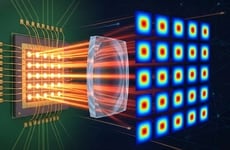




Atombeam Shrinks LiDAR Data for Cellular Transmission
Edited by Adam Harrie — September 17, 2026 — Tech
This article was written with the assistance of AI.
References: prnewswire
Atombeam is helping connected devices transmit larger volumes of information through AI-compacted data networks that reduce the amount of data traveling across existing infrastructure. Its Neurpac software uses machine learning to identify patterns and encode data into smaller transmissions before decoding it at the destination. In SIMSY testing, the technology compacted LiDAR data by 75%, addressing cellular uplink constraints that previously made moving these large data sets difficult in real time. The software can also process sensor, SCADA, database and system event data.
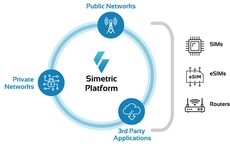
The approach could help enterprises expand data-intensive applications without immediately upgrading physical network infrastructure. SIMSY plans to offer Neurpac across its secure cellular network, supporting use cases including autonomous vehicles, drones, robotics and industrial automation. By reducing bandwidth requirements through software, organizations could increase transfer speeds, limit network congestion and extend the usefulness of existing cellular, wired and satellite infrastructure.
Image Credit: Atombeam
The approach could help enterprises expand data-intensive applications without immediately upgrading physical network infrastructure. SIMSY plans to offer Neurpac across its secure cellular network, supporting use cases including autonomous vehicles, drones, robotics and industrial automation. By reducing bandwidth requirements through software, organizations could increase transfer speeds, limit network congestion and extend the usefulness of existing cellular, wired and satellite infrastructure.
Image Credit: Atombeam
Digital Detox Travel Hardware
Consumers are adopting dumbphones and single-purpose gadgets as essential travel hardware to minimize digital distractions during summer trips.
Question 1
During a summer leisure trip, have you ever left your usual smartphone behind and used only a basic phone or "dumbphone" with limited functions?
Question 2
What was the MAIN reason you used this type of device during your trip?
Question 3
On a future leisure trip, how likely would you be to leave your smartphone behind and use only a basic phone with limited functions?
Trend Themes
-
AI-compacted Transmission — Machine learning-based encoding creates room for high-volume sensor streams to move across constrained networks with less dependence on costly infrastructure expansion.
-
Real-time Lidar Streaming — Compressed LiDAR data enables autonomous systems to share richer environmental information over cellular links where bandwidth limits previously restricted live operation.
-
Software-defined Bandwidth — Network performance gains shift from hardware upgrades to intelligent data reduction, opening new models for scaling connected devices across legacy infrastructure.
Industry Implications
-
Autonomous Vehicles — Reduced uplink demands make continuous sensor communication more practical for vehicles that require real-time perception data across cellular networks.
-
Industrial Automation — Factories and remote facilities gain broader capacity to transmit SCADA, robotics and event data without replacing existing connectivity systems.
-
Telecommunications — Cellular and satellite providers can extend network value by pairing secure connectivity with AI-driven compaction for enterprise data workloads.
4.5
Score
Popularity
Activity
Freshness