





Ambi Robotics and Pickle Robot Launch Its AmbiStack Integration Tool
Edited by Adam Harrie — July 19, 2026 — Tech
This article was written with the assistance of AI.
References: ambirobotics & digitalcommerce360
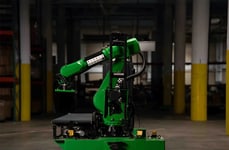
Ambi Robotics and Pickle Robot introduced an integrated warehouse automation solution that streamlines package movement from trailer unloading to pallet stacking. Developed in response to demand from Fortune 500 retail and logistics operators, the joint system combines Pickle Robot's trailer-unloading technology with Ambi Robotics' AmbiStack palletizing platform to create a fully automated dock-to-pallet workflow.
The solution uses Pickle Robot systems to unload cases from inbound trailers before transferring freight via conveyor to the AmbiStack system, which identifies, scans and stacks packages for downstream warehouse operations. The companies said the integration works with existing warehouse infrastructure, allowing operators to automate inbound processes without requiring major facility redesigns while maintaining a continuous flow of packages.
For warehouse operators, the integrated system reduces manual handling while improving throughput across inbound logistics. The collaboration also highlights the growing adoption of interoperable physical AI, where specialized robotic systems work together to automate complex supply chain operations more efficiently.
Image Credit: Ambi Robotics
The solution uses Pickle Robot systems to unload cases from inbound trailers before transferring freight via conveyor to the AmbiStack system, which identifies, scans and stacks packages for downstream warehouse operations. The companies said the integration works with existing warehouse infrastructure, allowing operators to automate inbound processes without requiring major facility redesigns while maintaining a continuous flow of packages.
For warehouse operators, the integrated system reduces manual handling while improving throughput across inbound logistics. The collaboration also highlights the growing adoption of interoperable physical AI, where specialized robotic systems work together to automate complex supply chain operations more efficiently.
Image Credit: Ambi Robotics
AI-Driven Creator Economy Tools
Creators are adopting AI-driven tools to monetize, remix, and engage audiences with innovative, consent-driven content, enhancing creative control and revenue opportunities.
Question 1
Do you currently create any kind of content for an audience on any of the following platforms?
Select all that apply
Question 2
Have you used any AI-powered tools to create or manage content in the past 12 months?
Question 3
What impact, if any, has using AI-powered tools had on your content creation?
Select all that apply
Trend Themes
-
Dock-to-pallet Automation — Integrated robotic workflows that connect trailer unloading with palletizing create new possibilities for faster inbound processing and reduced dependency on manual labor.
-
Interoperable Physical AI — Specialized robots working in coordinated systems signal a shift toward modular automation architectures that can adapt to complex warehouse environments.
-
Retrofit Warehouse Robotics — Automation designed for existing infrastructure lowers deployment barriers for operators seeking productivity gains without large-scale facility redesigns.
Industry Implications
-
Warehouse Automation — Robotic systems that unify unloading, scanning and stacking are reshaping how distribution centers manage throughput and labor constraints.
-
Logistics and Freight — Continuous package flow from trailers to warehouse operations supports more resilient inbound networks for retailers, carriers and third-party logistics providers.
-
Retail Supply Chain — High-volume retailers gain access to scalable automation models that improve inventory movement across distribution hubs and fulfillment operations.
4.5
Score
Popularity
Activity
Freshness