




Airtime Puzzle Rewards Users With Free Airtime For Memory Game Success
References: play.google
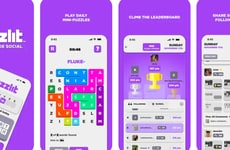
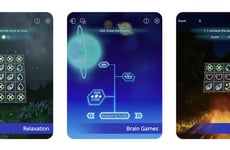
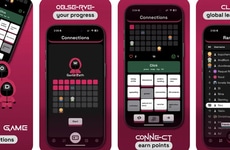
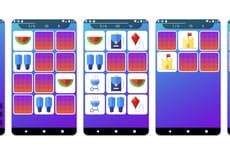
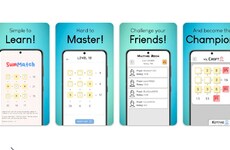
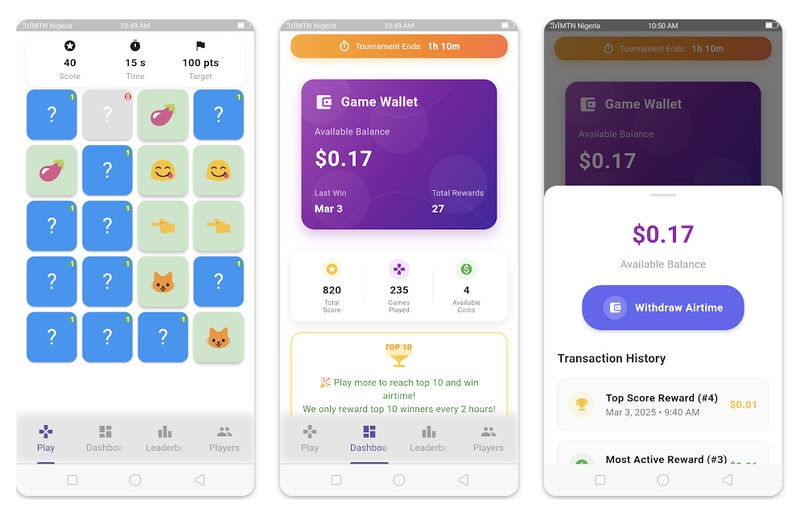
Airtime Puzzle is a mobile game designed to combine entertainment with rewards. The gameplay centers on a memory-based card-matching format, where players aim to pair cards to accumulate points. Achieving a score of 100 points within a 60-second time limit results in a monetary reward in the form of mobile airtime, providing a tangible incentive for engagement.
The game’s structure encourages repeated play and skill development, particularly in memory retention and quick decision-making under time constraints. From a business perspective, Airtime Puzzle illustrates a gamified rewards model that merges digital entertainment with micro-incentives, offering insights into user engagement strategies and retention. Its integration of a direct reward system demonstrates how mobile apps can motivate consistent interaction while providing measurable benefits to players.
Image Credit: Airtime Puzzle
The game’s structure encourages repeated play and skill development, particularly in memory retention and quick decision-making under time constraints. From a business perspective, Airtime Puzzle illustrates a gamified rewards model that merges digital entertainment with micro-incentives, offering insights into user engagement strategies and retention. Its integration of a direct reward system demonstrates how mobile apps can motivate consistent interaction while providing measurable benefits to players.
Image Credit: Airtime Puzzle
Digital Detox Travel Hardware
Consumers are adopting dumbphones and single-purpose gadgets as essential travel hardware to minimize digital distractions during summer trips.
Question 1
During a summer leisure trip, have you ever left your usual smartphone behind and used only a basic phone or "dumbphone" with limited functions?
Question 2
What was the MAIN reason you used this type of device during your trip?
Question 3
On a future leisure trip, how likely would you be to leave your smartphone behind and use only a basic phone with limited functions?
Trend Themes
-
Gamified Reward Systems — This trend emphasizes the synergy between gameplay and tangible incentives, highlighting the potential for apps that drive user engagement by offering real-world rewards.
-
Memory-based Game Mechanics — Focusing on cognitive skills, games like Airtime Puzzle use memory challenges to create immersive experiences, paving the way for educational and training applications.
-
Micro-incentive Strategies — Leveraging small, frequent rewards, this strategy can significantly enhance user motivation and retention, particularly in digital platforms where quick gratification drives sustained interaction.
Industry Implications
-
Mobile Gaming — Integrating reward structures within game mechanics can transform user engagement, offering new avenues for monetization and retention in the ever-evolving mobile gaming sphere.
-
Digital Marketing — The use of micro-incentives in apps demonstrates innovative pathways for brands to increase customer loyalty, making it a focal point for digital marketing strategies interested in gamification.
-
Edtech — Memory and skill-based games present opportunities for the educational tech industry to develop engaging, interactive learning tools that reward cognitive development.
3.6
Score
Popularity
Activity
Freshness