






AI Snap&Sort Guides Users To Recyclable, Compost, Or Landfill Bins
References: apps.apple
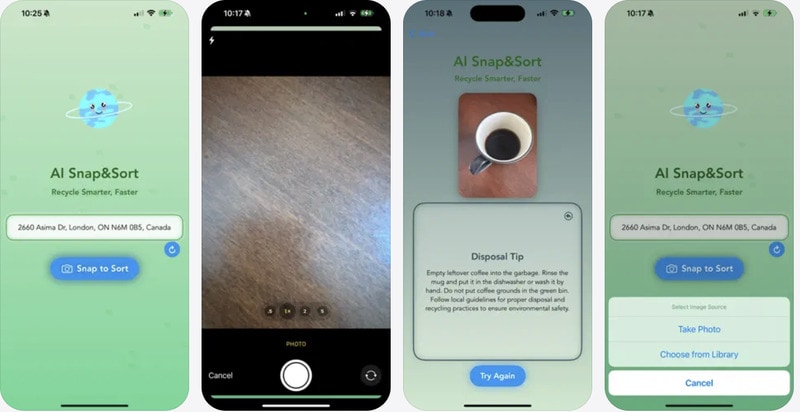
AI Snap&Sort is a mobile application designed to support proper waste disposal using computer vision and artificial intelligence. Users can take a photo of an item of trash, and the AI analyzes the image to determine whether it should be placed in a recyclable, compost, or landfill bin.
The system leverages image recognition and pre-trained datasets to categorize materials accurately, helping individuals make more environmentally responsible decisions without extensive knowledge of recycling rules. By simplifying waste sorting, AI Snap&Sort aims to reduce contamination in recycling streams and promote sustainable habits. The tool can be particularly useful in households, schools, and workplaces, offering a practical solution for users seeking to integrate eco-friendly practices into daily life.
Image Credit: AI Snap&Sort
The system leverages image recognition and pre-trained datasets to categorize materials accurately, helping individuals make more environmentally responsible decisions without extensive knowledge of recycling rules. By simplifying waste sorting, AI Snap&Sort aims to reduce contamination in recycling streams and promote sustainable habits. The tool can be particularly useful in households, schools, and workplaces, offering a practical solution for users seeking to integrate eco-friendly practices into daily life.
Image Credit: AI Snap&Sort
Consumer Demand Drives Foldable and Multi-Screen Devices
Consumers are adopting foldable and multi-screen devices as they seek more versatile and pocketable screen options for enhanced mobility and functionality.
Question 1
Which of the following types of devices have you personally used in the past 12 months?
Select up to 8
Question 2
What are the main reasons you use or chose this type of device?
Select up to 3
Question 3
How likely would you be to choose a foldable or multi-screen device the next time you purchase a smartphone, tablet, or laptop?
Trend Themes
-
AI-powered Waste Classification — A shift toward computer-vision-driven item identification that enables automated, scalable sorting systems capable of reducing contamination in recycling streams.
-
Edge Computer Vision for Everyday Devices — On-device image analysis that minimizes latency and privacy concerns while allowing real-time sorting guidance on smartphones and IoT-enabled bins.
-
Behavioral Nudging Through Real-time Feedback — Context-aware prompts and visual confirmations designed to reinforce correct disposal habits and gradually alter user behavior around waste practices.
Industry Implications
-
Municipal Waste Management — Integration of AI sorting data with collection logistics that could optimize route planning and enhance material recovery rates across urban systems.
-
Smart Home Appliances — Embedding image recognition into household bins and kitchen devices that would offer seamless sorting assistance and localized composting control.
-
Educational Institutions — Deployment of interactive waste-sorting tools in schools that can gamify recycling education and generate analytics to inform sustainability curricula.
2.7
Score
Popularity
Activity
Freshness